Barcelona, 17 July 2026
The first half of 2026 marked an unprecedented momentum in the history and life of the internationally organised constituency of cities and territories gathered in Global Taskforce. Kicking off with the LRG Days convened on the occasion of the 70th session of the UN Commission on the Status of Women to advance the Equality and Care development agendas, and culminating at the UCLG World Congress and Summit of Local and Regional Leaders organised in Tangier a few weeks after the World Urban Forum in Baku, the 100 Days of Local Multilateralism have provided a unique occasion for local and regional governments around the world to demonstrate the strength and ambitions of the Global Municipal Movement and prove their case regarding their pioneering role in driving the change we need.
Thus, subconsequently, the 2026 UN High-Level Political Forum (7-16 July 2026, New York) raised as the next logical step, not only to reaffirm the commitment of local and regional levels to keep leveraging advocacy efforts towards building a renewed, more inclusive, more accountable multilateralism that aims at care and people centered development, but also to prove their case through the use of local data, the promotion of voluntary subnational and local reviews, and the display tangible and innovative examples of the incontestable impact of transformative action grounded in the local.
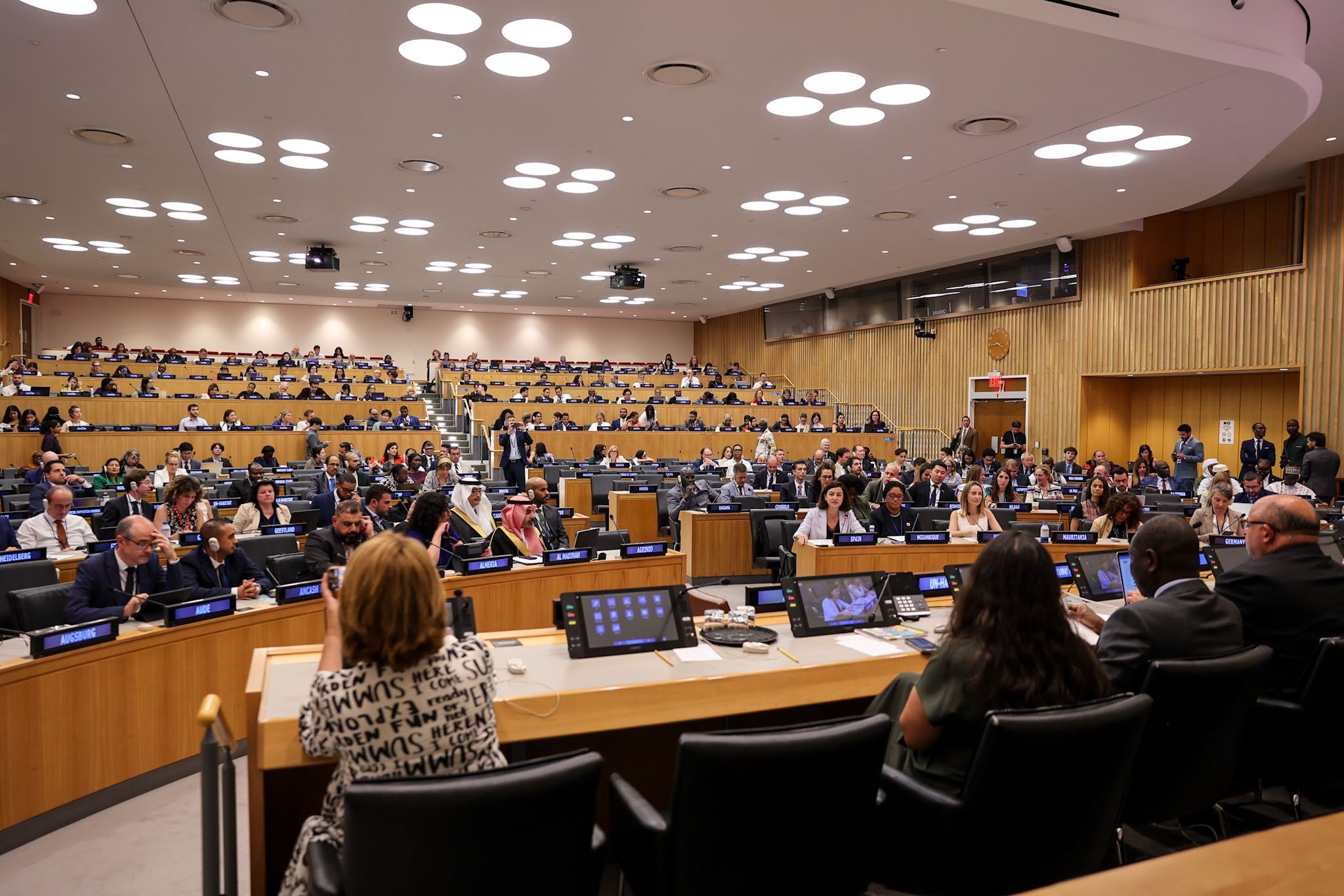
Gathering more than 50 mayors, governors, partners local and regional leaders and elected officials, as well as their key partners and allies -including representatives from key civil society organisations, academics and the UN System- the Local and Regional Governments Forum (LRGF) was organised in the premises of the United Nations Headquarters by the broader constituency of Local and Regional Governments gathered in the Global Taskforce, led by UCLG. With the support of a number of key partners -among which UN-DESA, EOSG, UNDP, UN-Habitat, and the Local2030 Coalition- the Forum set the scene: with 65% of the SDG targets only to be achieved with effective action and delivery at the local level, empowering local and regional governments (LRGs) to deliver everyday essential public services is critical.
At HLPF, cities and territories did not only come to demonstrate their direct impact on communities development and people’s lives, but also to bring a critical perspective: coordinated, inclusive and multilevel territorial governance can only emerge through reinforced and resilient multilateralism. Therefore, the LRGF stood as a key political space of the self-organized constituency of LRGs within the multilateral system, and raised as being critical to forge a common political understanding of the future of global governance that is inclusive, scaled and accountable.
Advancing Local and Regional Governments as Drivers of Renewed Multilevel Governance and Inclusive Public Service Delivery
Alongside the compelling opening words from President of the UN Economic and Social Council H. E. Lok Bahadur Thapa, who emphasised that “local action is where global ambitions are translated into local realities”, and “local leadership is indispensable to deliver a next phase defined by stronger partnerships and measurable actions” and UN Deputy Secretary-General H. E. Amina Mohammed, Co-President of UCLG and President of the South African Local Government Association (SALGA) Bheke Stofile recalled that “SDG 11 is at the core of local mandates. From housing and sustainable mobility to participatory planning, waste management, and heritage preservation, LRGs lead the development of inclusive, safe, and resilient human settlements through effective public policies and services. More than ever, our action is needed.”
Under the facilitation of the UCLG Leadership and hand-in-hand with UCLG Secretary General Emilia Saiz , the opening segment highlighted that 2026 represents a milestone for the organized constituency of local and regional governments, marking both the tenth Global Report on SDG Localization and the institutional consolidation of the LRG Forum within the HLPF. She underlined that the localization process has transformed the understanding of public services, climate action and gender equality, allowing local governments to move decisively from political recognition towards real ownership and implementation.
Speaking on behalf of UCLG's recently renewed political leadership, Bheke Stofile, Co-President of UCLG and President of SALGA, reminded participants and members from the international community that "the SDGs are not distant promises but the daily lives of people." He stressed that municipalities transform global commitments into shelter, safety, dignity and opportunity, adding that "municipalities are the first responders to crises" and that "SDG 11 must remain a driver of the 2030 Agenda." Calling for renewed multilateralism, he reaffirmed that local and regional governments must enjoy a permanent place within the United Nations system.
Delivering the Localization of the 2030 Agenda at Scale
Moderated by Bheke Stofile, the first panel explored how localization can be accelerated through stronger multilevel governance, financing and territorial planning.
Representing the Government of Spain, Secretary of State Eva Granados stressed that "the SDGs must be local," highlighting Spain's experience in strengthening cooperation between national and local governments. She identified three priorities for successful localization: strong institutions, financing fit for purpose and review mechanisms such as VLRs and VNRs capable of connecting local priorities with national strategies.
Carla Loveira, Minister of Finance of Mozambique explained how constitutional reforms, provincial SDG platforms and dedicated local development funds have strengthened territorial governance, arguing that localization requires clear legal mandates and predictable financing.
Speaking on behalf of the Local2030 Coalition, Dario Liguti argued that local governments must be involved "from the outset" in designing, implementing and monitoring SDG policies. He noted that the Coalition has already engaged with more than 2,000 localization initiatives worldwide and stressed that reporting must ultimately translate into increased local investment.
Kamal Kishore, Special Representative of the UN Secretary-General for Disaster Risk Reduction, emphasized that disaster risk reduction must become an integral part of territorial planning. He argued that coherent governance, innovative financing and evidence generated through VLRs are indispensable to building resilience, while national governments must engage local authorities early and provide adequate resources.
Representing New York City, Gianpaolo Baiocchi argued that "localization is about power, resources and effective governance," warning that cities continue to shoulder growing responsibilities without the fiscal tools necessary to deliver. He reaffirmed the importance of city diplomacy and multilateral cooperation between municipalities.
Mayor Eckart Würzner of Heidelberg shared how citizen participation, municipal ownership of utilities and local development banks have enabled the city to accelerate its transition, arguing that empowering municipalities financially is essential for long-term transformation.
Mayor Christina Kitsos of Geneva emphasized that cities remain "at the forefront" of climate change and growing social inequalities, presenting Geneva's work on housing, children's rights, food systems and social justice while reaffirming support for multilateralism rooted in dignity and human rights.
Representing Bilbao, councillor Eider Inunciaga stated that "localization is not a slogan but a method," describing how the city has embedded the SDGs into its everyday governance through cross-cutting strategies, citizen participation and co-creation across sectors.
Representing the Spanish Federation of Municipalities, Xavier García Albiol, Mayor of Badalona highlighted that the debate on the post-2030 agenda should build on local experience, stronger partnerships and predictable financing, insisting that the 2030 Agenda can only succeed if implemented locally.
Mayor Emily Jabbour of Hoboken described localization as "a governance model where trust in government is built," emphasizing integrated planning, climate resilience, green infrastructure and flexible financing as essential conditions for success.
Ndao Ababacar Khalifa, President of the Department Council of Dagana, presented Senegal's efforts to strengthen multilevel governance through improved financing, data systems and stronger dialogue between local governments, national authorities and the United Nations.
Mayor Francisco Legnani of Canelones showcased the city's work on waste management, recycling, transport decarbonization and environmental legislation, calling for stronger cooperation among cities to accelerate climate action.
SDGs Under Review: Reclaiming Essential Public Services
Chaired by Fatimetou Abdel Malick, President of the Nouakchott Region and Co-President of UCLG, the second panel focused on reclaiming essential public services as a cornerstone of the SDGs under review.
Bärbel Kofler, Parliamentary State Secretary of Germany, highlighted decentralized cooperation as a practical instrument for SDG localization, arguing that municipalities require stronger financing and international partnerships to scale up successful initiatives.
Representing UNDP, Sarah Lister argued that local action must be integrated across sectors, while emphasizing that innovative financing, reliable local data and strengthened fiscal frameworks are indispensable during the final years of SDG implementation.
UN Special Rapporteur on the Right to Adequate Housing Koldo Casla reminded participants that local governments are not simply stakeholders but duty bearers of human rights, especially regarding the right to adequate housing, calling for stronger public housing policies and attention to vulnerable populations.
Prefect Leonardo Orlando of Manabí demonstrated how territorial planning, infrastructure investments, renewable energy, international financing and successive Voluntary Local Reviews have contributed to reducing poverty and improving living conditions across the province.
Clare Hart reaffirmed that essential public services constitute the foundation of human dignity. She insisted that access to water must remain a public good, while calling for predictable financing and stronger recognition of UCLG and local government networks as strategic partners.
Bekzhan Usenaliev presented Bishkek's investments in waste-to-energy infrastructure, cleaner schools and improved water management, while stressing that access to financing remains a major challenge.
Gunn Marit Helgesen highlighted Norway's experience in green procurement, renewable energy and democratic governance, stressing that stable political support and coordinated regional planning remain essential.
Governor Luis Ernesto Neyra of Piura reflected on Peru's political instability while highlighting the region's investment efforts and territorial development achievements.
Representing the Basque Government, Ander Caballero argued that "the time has come to scale up" localization through collaborative governance, warning that systemic challenges cannot be addressed through institutional silos.
Rachid El Abdi, President of the Rabat-Salé-Kénitra Region, called for regions to gain faster access to international financing and stronger platforms for cooperation, particularly to respond to climate change, water scarcity and territorial inequalities.
Mayor Francisco Peña of Santo Domingo Oeste underlined the importance of cooperation between local and national governments in housing, health and transport while pointing to fiscal autonomy and waste management as key challenges for municipalities.
Representing Sardinia, Advisor on the Defense of the Environment Rosanna Laconi shared the region's experience aligning funding, governance and stakeholder participation around SDG localization through inclusive planning and evaluation mechanisms.
Closing the panel, Jordi Castellana, Vice-President of the Barcelona Metropolitan Area, argued that metropolitan governments have a unique opportunity to deliver quality public services, calling for stronger democratic institutions and direct access to international financing.
UN Engagement with Local and Regional Governments
The third panel, chaired by Berry Vrbanovic, Co-President of UCLG and Mayor of Kitchener, focused on strengthening the institutional engagement of local and regional governments within the United Nations system during the final stretch towards 2030.
Italy's Claudio Barbado stressed that SDG localization is essential to translating global commitments into concrete action and highlighted Italy's support for VLRs and multilevel governance.
Mayor Fahad Al Buliheshi of Al Madinah explained how SDG localization has become institutionalized in Saudi Arabia, emphasizing people-centred development, stronger coordination between national and local governments and the country's readiness to contribute to the global countdown to 2030.
Mayor María del Mar Vázquez of Almería highlighted that local governments best understand community needs, calling for effective participation, stable financing and genuine multilevel governance while showcasing Almería's progress in housing and localization.
Mayor Wim Dries of Genk delivered one of the Forum's strongest messages, stating that "the SDGs will be local or they won't be." He called for local governments to become equal partners in UN decision-making and for financing to match local responsibilities.
Deputy Mayor Antoine Le Solleuz of Nancy argued that local governments must move beyond implementing national decisions to becoming fully recognized political actors within multilateral governance.
Mayor Yuri Colorado of Muisne described how international cooperation has enabled her municipality to expand access to drinking water and reduce inequalities, while advocating for stronger women's leadership in local government.
Representing Lombardy, Giorgio Maione highlighted regional investments in renewable energy, climate adaptation, water security and territorial resilience while stressing the strategic role of subnational governments.
Representing UN-Habitat, Oumar Sylla called for the systematic inclusion of local governments in decision-making, stronger national frameworks, improved financing and better use of local data as the foundation for implementing the New Urban Agenda.
Paloma Palacios, representative of the State of Querétaro in Mexico City highlighted citizen participation, long-term planning and improved food security as examples of how people-centred public policies can accelerate the SDGs.
Closing the LRGF: Towards the next generation of global goals
In her closing remarks, Emilia Saiz thanked participants for bringing forward practical solutions capable of strengthening localization worldwide and reaffirmed that multilateralism can only succeed if grounded in territories.
Speaking on behalf of the Local2030 Coalition, Anacláudia Rossbach, Executive Director of UN-Habitat, stressed that localization has become central to the UN system's work. She warned that the final challenge for the SDGs lies in closing the delivery gap through stronger local financing, implementation capacities and institutional recognition of local governments.
Finally, Navid Hanif, Assistant Secretary-General of UN DESA, argued that "the future of sustainable development will be decided by public institutions," emphasizing that local and regional governments have become co-creators of the post-2030 agenda. He concluded with one of the Forum's key messages: "partnership is not an option but a public infrastructure."
Arriving at the tail end of the 100 Days of Local Multilateralism, the Local and Regional Governments Forum marked the culmination of a coordinated advocacy process the Global Taskforce that connected key global milestones throughout the year—from CSW70 and the World Urban Forum to the UCLG World Congress in Tangier and the review of SDG 11—around a single political objective: demonstrating that renewed multilateralism can only succeed if it is rooted in territories and driven by local and regional governments.
Throughout these 100 days, the organized constituency of local and regional governments consolidated a common political voice, strengthened alliances across the UN system, and advanced concrete proposals for embedding multilevel governance at the heart of the post-2030 international architecture.
Looking ahead, the momentum generated during these 100 Days now shifts towards the implementation of the commitments made throughout the process, contributing to the ongoing discussions on the reform of the High-Level Political Forum, the midterm review of the New Urban Agenda, the preparations for the UN@80 process, and, ultimately, the co-creation of a renewed Post-2030 Agenda in which local and regional governments are recognized as permanent partners in global governance.
In the run-up to 2030, the final SDG Summit in 2027 will need to build on the lessons shared throughout these 100 days. With only 4 short years to meet the ambitious universal development agendas, the constituency of local and regional governments is ready to step up and be a part of the global conversations and to shape our future in 2030 and beyond.
- Check out the photo gallery of the LRG Forum organised in the context of the 2026 UN HLPF.